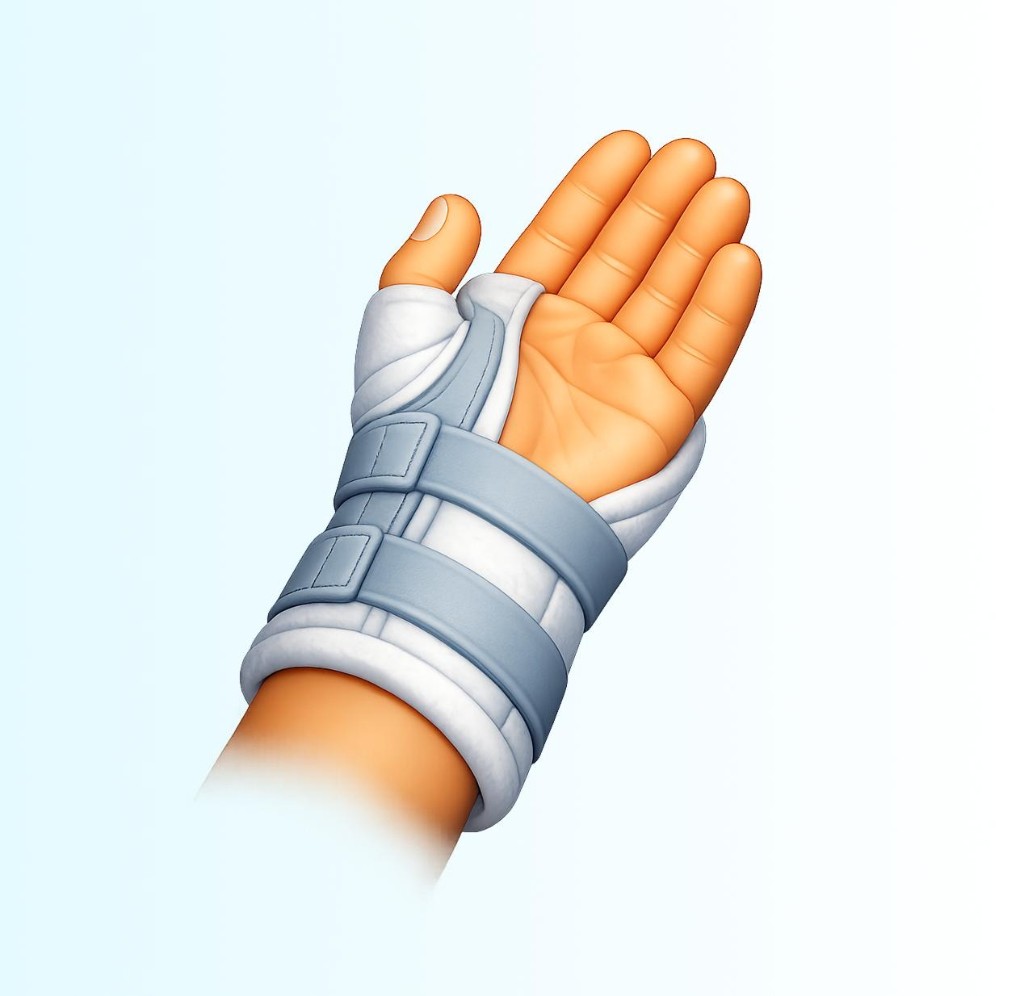
TFCC repair or debridement (ulnar-sided wrist)
Surgery focused on the triangular fibrocartilage complex on the pinky side of the wrist — a key stabilizer between the forearm bones and the wrist. The operation may smooth torn tissue, repair tears, or combine with other procedures depending on the pattern of injury.
- Phases
3
- Red flagsEscalation
3
- Sources
1
Page reviewed — follow your clinical team for decisions.
Why it's done
- Persistent ulnar-sided wrist pain or instability when surgery is indicated
- Mechanical symptoms that have not improved with appropriate conservative care
Typical recovery phases
General patterns only — your protocol wins.
These phases describe common themes many teams use after this type of procedure. Your surgeon and hand therapist set the exact timeline, motion limits, and return-to-work or driving rules.
- Phase 1Weeks 0–4
Protect the repair; limit provocative loading.
Wear splinting as directed; avoid forceful ulnar deviation and heavy grip early.
- Phase 2Weeks 4–10
Restore motion and light function.
Forearm rotation and wrist motion progress gradually with therapist guidance.
- Phase 3Weeks 10–16+
Strengthen and return to tasks.
Expect stepwise return to sport or tools only when cleared.
Red flags — call your team
Contact your surgical team urgently for new or worsening symptoms like these. If you cannot reach them and the problem feels life-threatening, use local emergency services.
- New numbness in ring and small fingers
- Severe swelling or color change
- Sharp instability with light daily tasks
Sources
Independent references we used to shape this overview. They do not replace your clinician's instructions or your local emergency pathways.
- Triangular Fibrocartilage Complex (TFCC) Tears — AAOS OrthoInfo(accessed 2026-04-30)