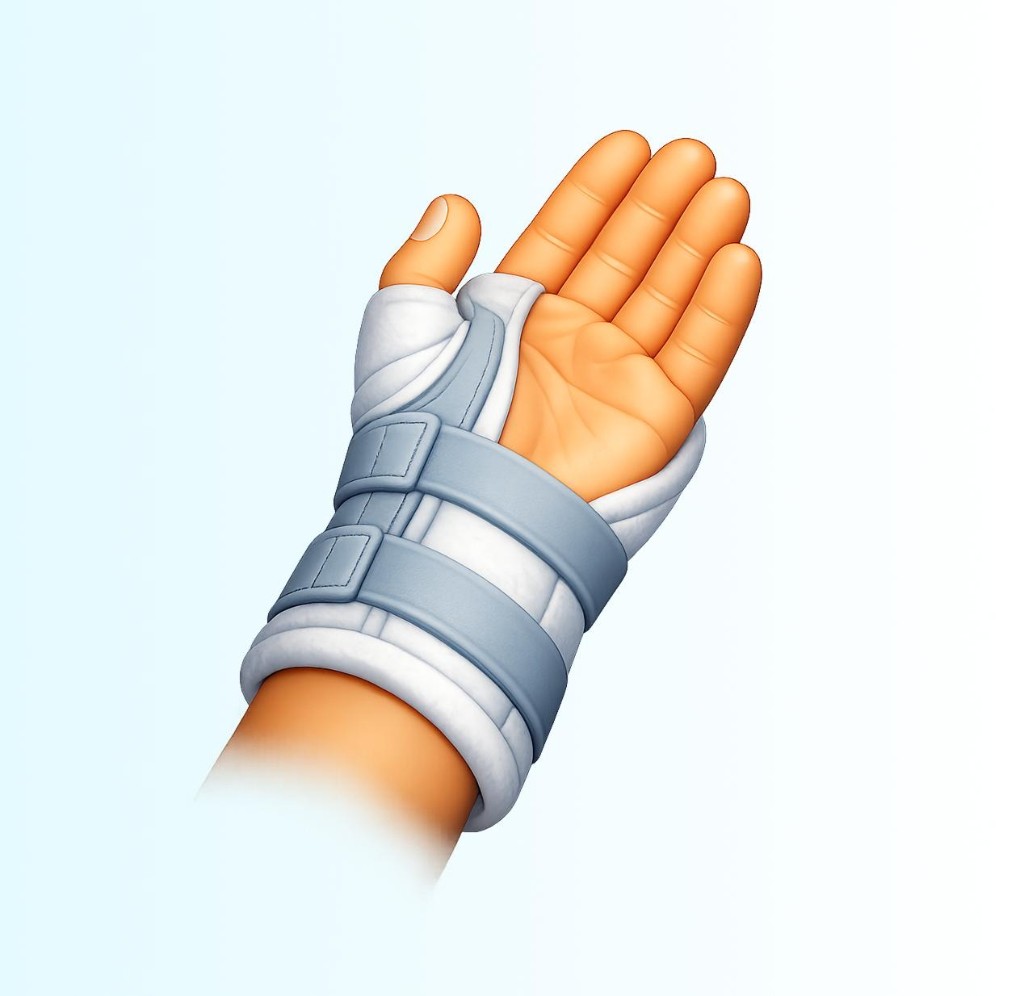
Hand recovery patients
Real-world situations we tune education around — not a diagnosis. Use search or story filters, then open a profile. Press / outside a field to jump to search.
23 profiles visible with current filters.
Filter by situation, work context, or recovery stage. Profiles are educational groupings — not a diagnosis. Press slash (/) anywhere on this page outside a text field to jump to search.
Post-op tendon repair
You had a flexor or extensor tendon repaired and are following a surgeon's protocol.
Plain-language guide to recovery after flexor or extensor tendon repair. Phases, safety rules, and how a clinician-aware app supports your protocol.
Open profilePost-op fracture (finger, hand, or wrist)
You had a fracture stabilized with surgery (pins, plates, or screws).
What to expect after fixation of a finger, metacarpal, or distal radius fracture. Clearance gates, swelling, and motion-first rehab.
Open profilePost-op nerve repair
You had a nerve repaired and sensation or motor control is changing.
Education for patients recovering from a digital, median, ulnar, or radial nerve repair. Sensory re-education, motor retraining, and protective sensation.
Open profileAfter carpal tunnel release
You had carpal tunnel surgery and want to return to typing, gripping, and daily tasks safely.
What to do — and what to avoid — in the weeks after carpal tunnel release. Tendon gliding, scar care, pillar pain, and graded return to grip.
Open profileFresh injury, no surgery yet
Your hand was injured recently and you have not yet been evaluated.
Sprained, jammed, crushed, or cut your hand and not yet evaluated? Use this guide to protect the hand, watch for red flags, and seek the right care.
Open profileStiffness after a cast or splint
Your cast or splint just came off and your hand feels stiff and weak.
Plain-language guide to regaining motion after immobilization. Tendon glides, blocking, edema control, and frequency-over-force programming.
Open profileCarpal tunnel symptoms (no surgery)
You have median nerve symptoms — tingling, night pain, dropping objects.
Tingling in the thumb, index, and middle fingers? Conservative care for carpal tunnel: tendon glides, gentle nerve glides, ergonomics, and night splinting.
Open profileCubital tunnel symptoms (ulnar nerve at elbow)
You have ulnar nerve–pattern symptoms — often worse with prolonged elbow flexion or leaning on the arm.
Ring and small-finger numbness worse when the elbow stays bent? Education on positioning, pacing, gentle nerve mobility ideas, and red flags.
Open profileDupuytren's contracture
Your palm or fingers are tightening with cords or nodules — gripping and laying the hand flat gets harder.
Palm nodules, cords, and bent knuckles? Education on joint protection, table-top opening work, and when splints, injection, or referral help.
Open profileUlnar-sided wrist pain (TFCC-type complaints)
Your wrist hurts on the ulnar (pinky) side — often worse with twist, push-up, or heavy grip.
Pain on the pinkie side of the wrist with rotation, weight bearing, or grip? Education for TFCC-type complaints: stability, graded loading, and clinician milestones.
Open profileTrigger finger
Your finger catches, clicks, or locks — especially in the morning.
Education for trigger finger (stenosing tenosynovitis): activity modification, gentle tendon gliding, and when to consider injection or release.
Open profileDe Quervain's (often new parents)
You have radial wrist pain — common in new parents, texters, and lifters.
Thumb-side wrist pain that flares with lifting, texting, and childcare. Conservative care, splinting, and graded loading.
Open profileThumb base (CMC) arthritis
Your thumb base hurts when you pinch, open jars, or turn keys.
Pain at the base of the thumb during pinch, jar opening, and key turning. Joint protection, thumb stability, and graded isometrics.
Open profileInflammatory arthritis flare
Your hand joints are hot, swollen, and stiff — often with a systemic condition.
Hot, swollen, painful hand joints with prolonged morning stiffness. Flare-mode care, joint protection, and when to escalate.
Open profileDesk worker / programmer overuse
You type and mouse for a living and your hands are paying for it.
Typing, mousing, and phone use that produce wrist, finger, and forearm symptoms. Pacing, ergonomics, and graded mobility for office work.
Open profileManual trade / repetitive grip
You grip, twist, vibrate, or impact your hands at work all day.
Construction, mechanics, hairstyling, and other trades load the hand hard. Recovery and prevention strategies for high-grip occupations.
Open profileAthlete or musician (precision hand)
You need precision, endurance, and pain-free return to your sport or instrument.
Climbers, golfers, racquet sports, guitarists, pianists, and string players need precision and endurance. Phased return that respects sport- or instrument-specific load.
Open profileOlder adult — grip and dexterity decline
You want to keep opening jars, buttoning shirts, and gripping safely as you age.
Gradual grip and dexterity loss with age. Joint-friendly mobility, low-load strengthening, and adaptive equipment for daily independence.
Open profileNeurological hand impairment
You're rebuilding hand function after a stroke or another neurological condition.
Hand recovery after stroke or neurological conditions. Task-specific practice, active intent, and quality of movement over volume.
Open profileBurn or skin contracture recovery
You're recovering from a burn, graft, or significant scarring on the hand.
After a hand burn, skin grafting, or scar contracture: anti-contracture positioning, frequent gentle motion, and staged scar care.
Open profileNever injured — want strong, healthy hands
You are building hand capacity (strength + control) and want benchmarks without pushing into overuse.
Athletic-feeling grip, pinch, endurance, and dexterity with symptom rules and load audits — not a substitute for care when you are injured or have red-flag symptoms.
Open profileSuspected complex regional pain syndrome
Your symptoms feel out of proportion — color, temperature, and pain changes that don't make sense.
Disproportionate pain, color or temperature change, severe sensitivity, and stiffness after a minor injury. Why CRPS needs specialist care.
Open profileUndiagnosed and cautious
You're not sure what's wrong yet — and want to do something safe in the meantime.
Not sure what's going on with your hand? Conservative, low-risk steps to take while you arrange evaluation.
Open profileHand-heavy jobs
One tap opens the closest patient profile for education and app defaults — not a diagnosis or job-site clearance.
Next steps on HandTherapy.app
Structured tracks complement these profiles — they are not automatic prescriptions.
Not sure which fits? Start the intake questionnaire — it can match a profile automatically.