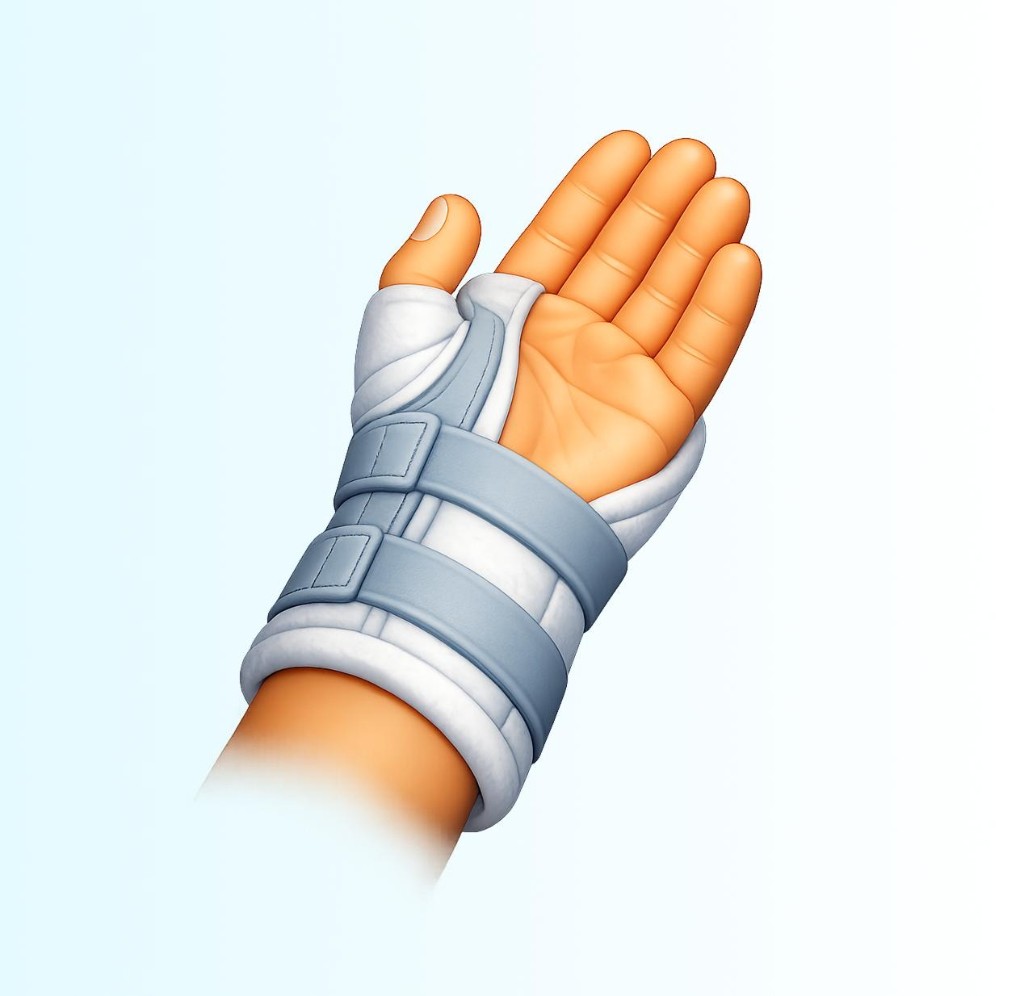
Regimens by condition & phase
Programs vary by condition, recovery phase, and what limits you most — stiffness, pain, weakness, numbness, scar, dexterity, or endurance.
Recovery marketplace (education)
Curated assistive ideas with retailer search shortcuts — not medical advice. Mark what you already own in My kit on the shop hub.
Pick a condition
Condition-specific programs
Phases, exercises, dose tables, equipment, and progression rules on each page.
Search program names and topics, or filter by dominant limitation. Educational programs only — not medical advice.
Showing 15 of 15 programs
- stiffnessweakness
General stiffness after immobilization
Common after cast removal, splinting, swelling, or a long rest period — fingers and wrist feel stuck and weak.
Phases: 1, 2, 3, 4Open - stiffnessweakness
Hand or finger fracture recovery
After a healing fracture: stiffness, weak grip, swelling, fear of using the hand, and finger extension loss are common.
Phases: 0, 1, 2, 3, 4, 5Open - scarstiffnessweakness
Tendon injury or tendon repair
Flexor and extensor tendon injuries follow strict protocols — too much force can rupture the repair, too little motion causes adhesions.
Phases: 0, 1, 2, 3Open - numbnesspain
Carpal tunnel syndrome
Median nerve irritation causing numbness, tingling, weak pinch, and night symptoms. Aim is gentle nerve and tendon glide, not aggressive stretching.
Phases: 1, 2, 3Open - painstiffness
Trigger finger
Catching or locking finger with pain at the base. Heavy gripping during the catching phase usually backfires.
Phases: 1, 2, 3Open - painstiffnessweakness
Arthritis of the hand
Joint pain, stiffness, swelling, and reduced pinch. Arthritis programs need a 'flare mode' for swollen days.
Phases: 1, 2, 3, 4Open - painweakness
Wrist sprain or ligament irritation
Pain with weight-bearing or twisting, often with weak grip because the wrist is acting as a painful foundation.
Phases: 1, 2, 3, 5Open - numbnessdexterity
Nerve injury, numbness, or sensory loss
After nerve repair, crush, or compression — sensation may return as tingling, buzzing, hypersensitivity, or patchy feeling before it feels normal.
Phases: 1, 2, 3, 4Open - scarstiffness
Scar tightness & tendon adhesions
After surgery, deep cuts, burns, or crush injuries — a small scar can tether tissue if it does not glide.
Phases: 2, 3, 4Open
The phase ladder
Universal recovery phases
Every regimen sits in a phase — advance only when symptoms stay calm.
- 0
Protection & red flags
Avoid making the injury worse.
Elevation many times daily; cleared motion 3–6 micro-sessions/day; no heavy grip; no aggressive stretching.
Phase details - 1
Early motion & swelling control
Keep tissue moving without stressing healing structures.
5–10 min/session × 3–5/day; low intensity; smooth movement; no forcing end range.
Phase details - 2
Active range of motion & tendon gliding
Restore normal joint motion and tendon sliding.
10–15 min × 3/day; hold gentle end-ranges 3–10s; track fist closure & finger straightening.
Phase details - 3
Light strengthening
Rebuild grip, pinch, wrist, and endurance without irritating tissue.
1–3 sets × 8–15 reps; 2–4 days/week; increase only when symptoms stay calm 24h.
Phase details - 4
Dexterity & coordination
Make the hand useful in real life again.
5–15 min daily; short and precise; stop before fatigue causes sloppy movement.
Phase details - 5
Endurance & return to work / sport
Tolerate real loads, speed, vibration, repetition, and awkward positions.
3–5 days/week; change one variable at a time (time, load, speed, range, complexity); 24h symptom check.
Phase details