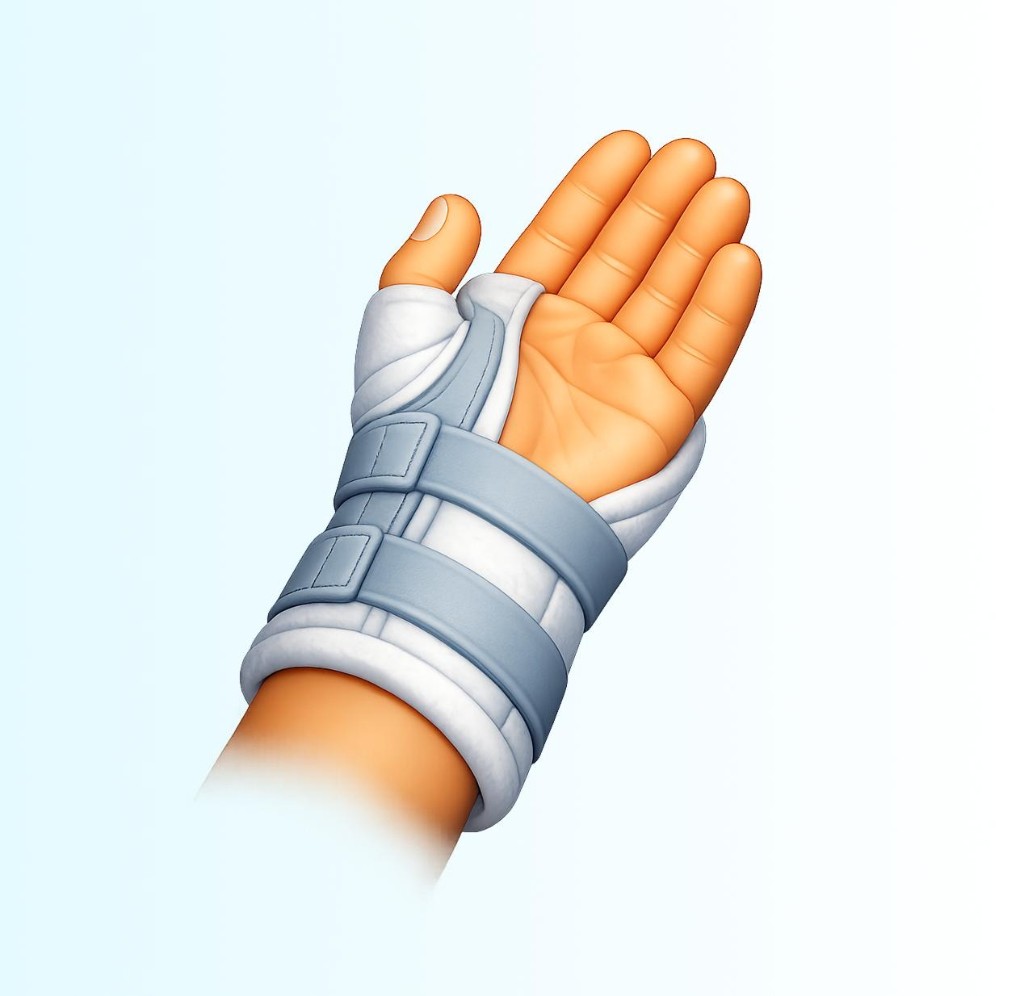
Counterforce brace (tennis elbow strap)
A forearm strap that spreads force away from tender wrist extensor tendons near the elbow — often used during gripping or racquet tasks when a clinician says it is appropriate.
Related surgery article (education only)
Orientation when people compare splints with common procedures — not individualized medical advice.
Tennis elbow surgery (lateral epicondylitis release)Commonly used for
- Lateral elbow tendinopathy symptoms during gripping or lifting, after evaluation
- Graduated return to sport or repetitive work, as cleared
Cautions
- Numbness, tingling, or color change in the hand if the strap is too tight
- Masking pain from a neck nerve problem or other elbow pathology
- Skin irritation from neoprene or pressure
Typical wear
Often worn only during aggravating activities rather than 24/7 — follow the plan from your clinician or therapist.
Care
Hand-wash fabric; air dry. Loosen between tasks if the hand feels puffy. Replace when elastic loses recoil.
Cost (USD)
$12–$45. Mostly off-the-shelf; premium brands cost more.
How to get one
- Retail pharmacy
- Online
- Hand therapist (fit guidance)
Prescription: Usually not required. If symptoms persist beyond a few weeks or include neck pain, get evaluated.
Related splints
Cross-links for context only — not a personalized care plan.
- Wrist cock-up splintHolds the wrist in a comfortable, slightly extended position to reduce pressure on the median nerve and rest irritated wrist tendons.
- Elbow extension night braceA brace that limits how much the elbow bends at night — sometimes used when ulnar nerve symptoms flare with sleeping with the elbow deeply bent, or after cubital tunnel surgery as part of a surgeon-directed plan. It is not a substitute for evaluation if numbness or weakness is worsening.
Browse sessions beside splint education
These buttons open the exercise and movement libraries with filters cleared for browsing only — not a match for this splint without your clinician’s clearance.