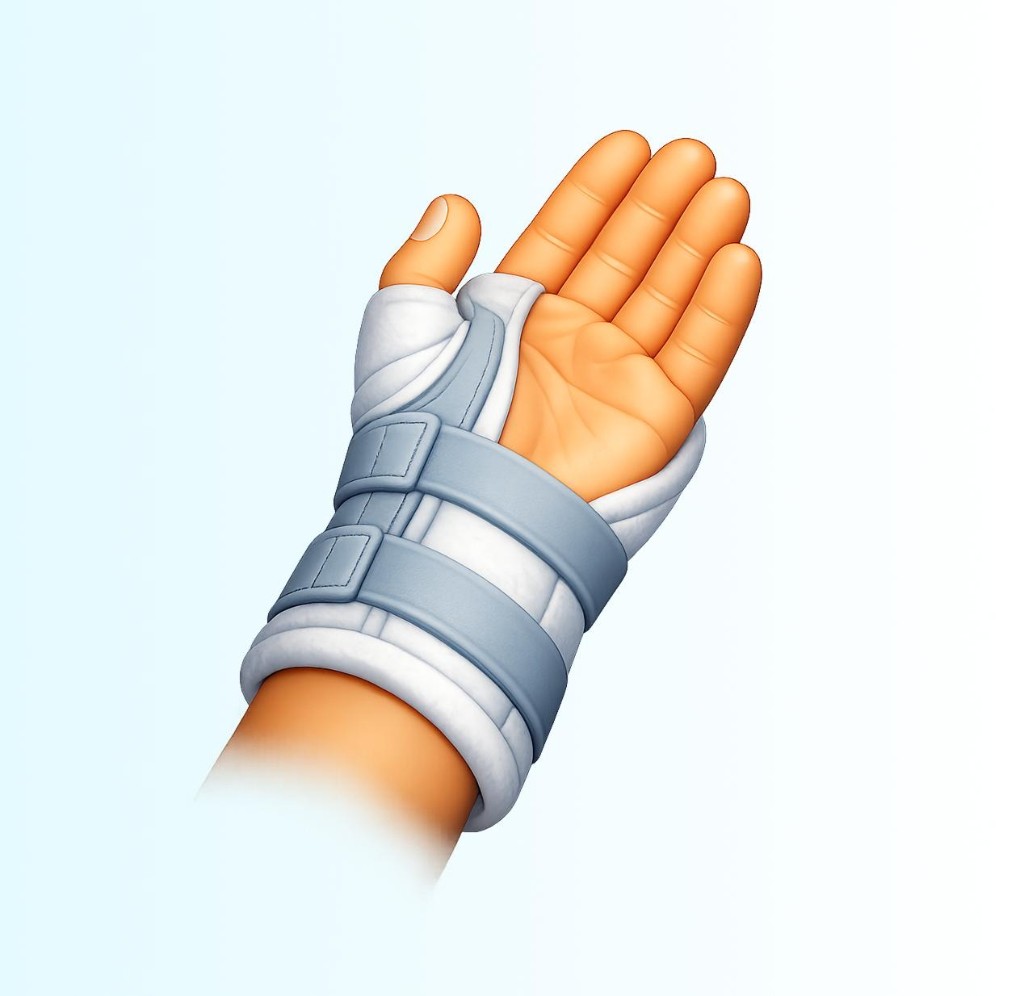
Wrist isometrics
Multi-direction wrist isometric holds
Goal
Builds wrist stability with low joint shear.
Motion taxonomy (reference)
Also called: multi direction wrist holds · neutral wrist position · wrist isometric stability · wrist neutral handshake position
Muscles — deviation muscles, forearm pronators/supinators, pronators, supinators, wrist extensors, wrist flexors, wrist stabilizers
Tendons — wrist stabilizer tendons, wrist tendons
Bones / joints — carpal bones, radiocarpal joint, radius, ulna, wrist joint
Indexed benefits: builds stability · builds stabilization · early strengthening · good baseline for function · improves neutral wrist control · improves wrist control · prepares for strengthening · protects painful joints · reduces strain · supports functional positioning · supports neutral alignment
Common contexts: functional starting posture · neutral alignment · neutral positioning · neutral posture · pain-limited rehab · pain-limited strengthening · pain-sensitive hands · sprain recovery · stability training · stability work · starting position · wrist mobility · wrist pain · wrist sprain recovery
Best for
- Wrist sprain return
- Pre-load preparation
Default dose
3 reps • 1 sets • 10s hold • 3×/week — Each direction
Avoid when
- Pain reproduced by static load
Measurement targets
- Hold time tolerated
Setup
- Forearm supported on a table.
Steps
- 1Use the other hand to resist the wrist in each direction.
- 2Hold gently 10 sec each.
Cues
- Pain-free effort, not maximal.
Common mistakes
- Maximal effort early.
Stop if you feel
Stop rules
- Sharp pain (≥ 4/10)
- Increasing swelling during or after
- New or worsening numbness or tingling
- Color change in fingers (pale, blue, red)
- Wound opens, drains, or feels hot
- Next morning is worse than the day before
Progressions
- Move to light band resistance, then dumbbell.
Regressions
- Shorter hold.
What to do next — not a dead end
Suggestions use body region, goal, motion type, and allowed phases — not your medical record. After surgery or a flare, follow your clinician first.
~1 min if held as written
3 reps · 1 sets · 10s hold
None required — table or bodyweight only.
Phases 3, 5
Generally lower load — still respect pain and swelling.
Where this shows up clinically
How phases map to healingNext best movements
Later phase or richer progression when you are ready.
Prerequisite / gentler lane
Same region and intent — usually earlier phase or lower risk.
Commonly paired with
Different primary goal, same region — typical mixed sessions.
Related movements
Similar mechanics, goals, or anatomy.
- Wall weight bearingstrength · moderate risk
- Fingertip support (advanced)strength · clinician-only risk
- Thumb dynamic band pullsstrength · moderate risk
- Radial deviation isometric (table)strength · moderate risk
- Ulnar deviation isometric (table)strength · moderate risk
- Pronation isometric bracestrength · moderate risk
- Supination isometric bracestrength · moderate risk
- Towel wringingstrength · moderate risk
Keep momentum without overdoing it
Log a short check-in to protect your streak — even one quality set counts.