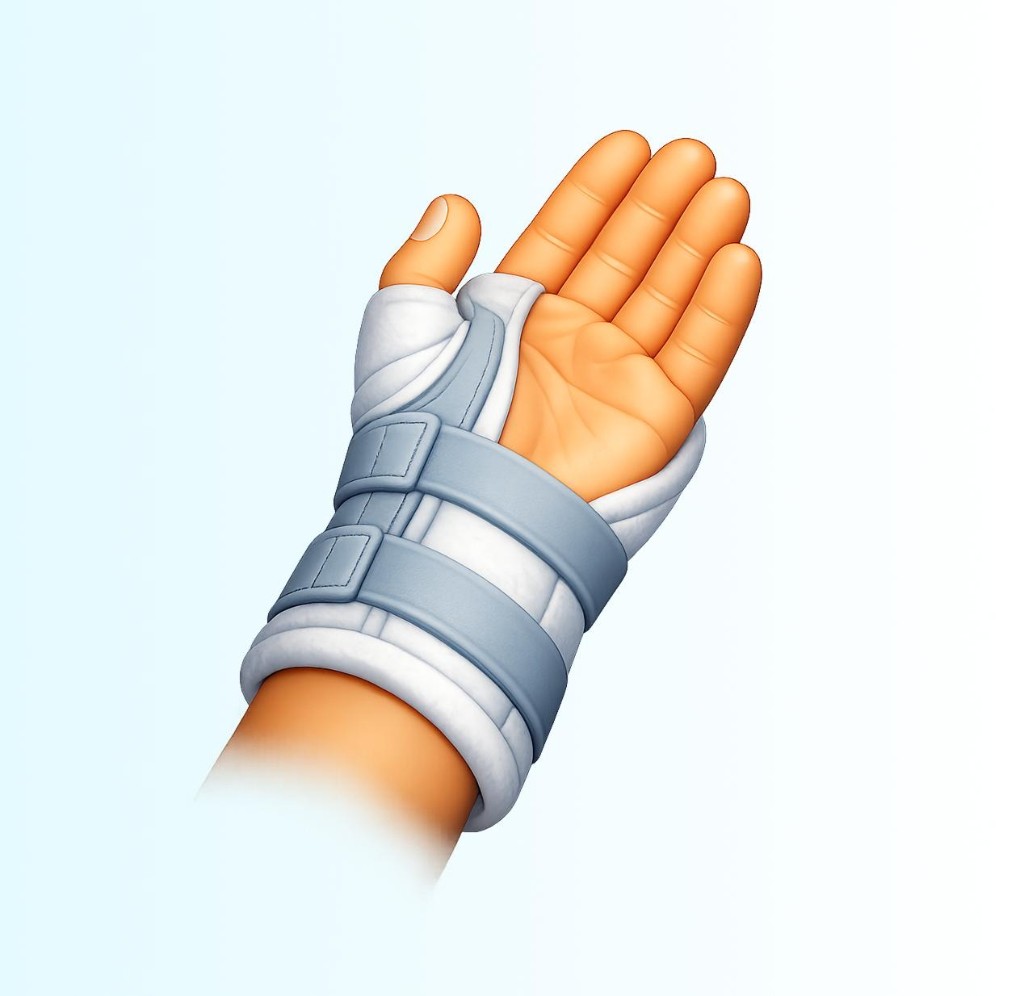
Flexor tendon repair
Surgical repair of a cut or torn finger flexor tendon. Recovery is highly protocol-driven.
- Phases
3
- Red flagsEscalation
3
- Sources
1
Page reviewed — follow your clinical team for decisions.
Why it's done
- Cut or ruptured flexor tendon, often after a laceration
Typical recovery phases
General patterns only — your protocol wins.
These phases describe common themes many teams use after this type of procedure. Your surgeon and hand therapist set the exact timeline, motion limits, and return-to-work or driving rules.
- Phase 1Weeks 0–4
Protect the repair; controlled motion in a dorsal blocking splint.
Strict splint wear; perform exactly the motion your therapist prescribes.
- Phase 2Weeks 4–8
Active motion without resistance.
Splint adjustments; more motion, no lifting.
- Phase 3Weeks 8–12
Begin light strengthening as cleared.
Light putty; progress only with therapist sign-off.
Red flags — call your team
Contact your surgical team urgently for new or worsening symptoms like these. If you cannot reach them and the problem feels life-threatening, use local emergency services.
- A sudden 'pop' with loss of finger bending — possible re-rupture
- Increasing pain, redness, drainage, or fever
- Worsening numbness
Sources
Independent references we used to shape this overview. They do not replace your clinician's instructions or your local emergency pathways.
- Flexor tendon injuries — American Society for Surgery of the Hand(accessed 2026-04-21)