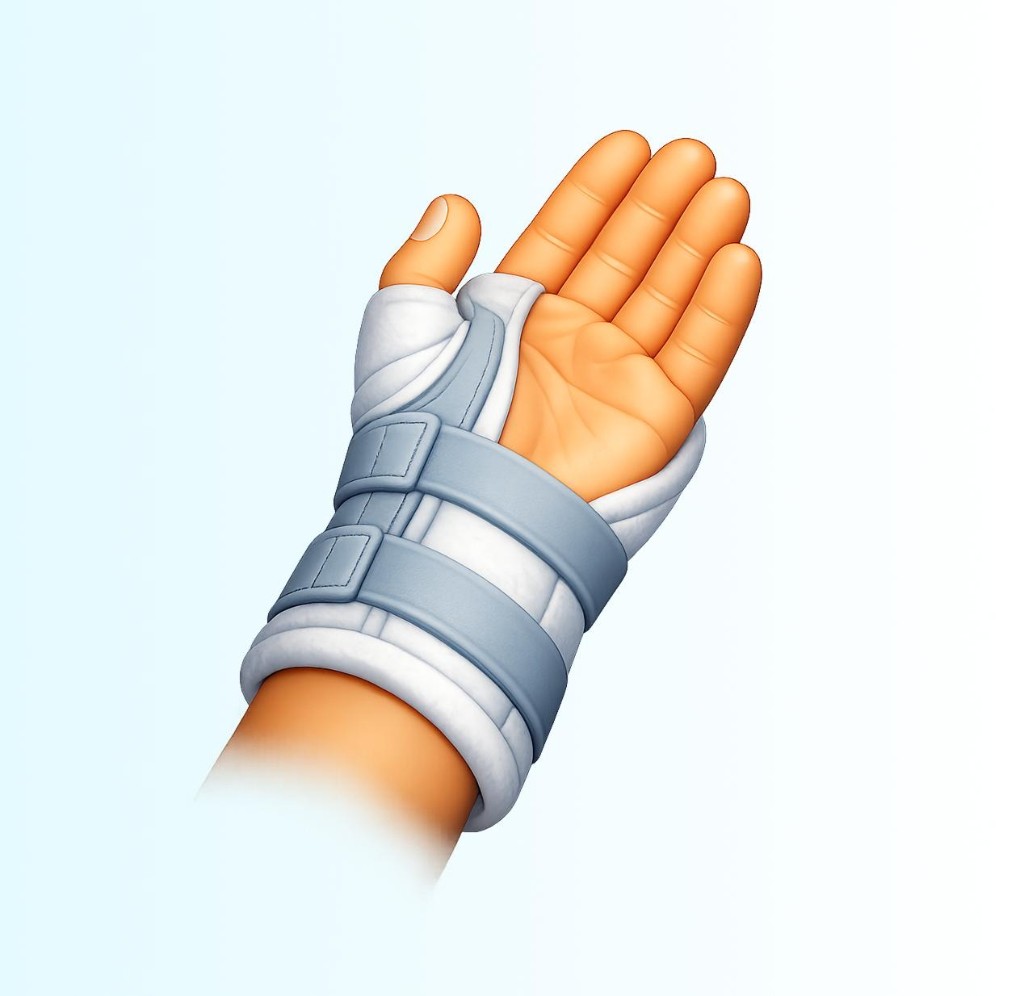
Patient profile · Conditions
Ulnar-sided wrist pain (TFCC-type complaints)
Your wrist hurts on the ulnar (pinky) side — often worse with twist, push-up, or heavy grip.
Pain on the pinkie side of the wrist with rotation, weight bearing, or grip? Education for TFCC-type complaints: stability, graded loading, and clinician milestones.
Hands tired from a specific job? Browse hand-heavy job shortcuts on the patient hub.
Education-only job paths — not job-site clearance.
Typical load pattern for this profile: Desk-shaped movements · Guided exercise library
Who it fits
People this profile usually fits
- Ulnar wrist pain with forearm rotation or weight bearing
- Clicking or instability feelings after a fall or twist
- Athletes, manual workers, or keyboard users with ulnar-sided overload
What recovery often looks like
Phases and themes
- Early: reduce provocative rotation and end-range load.
- Graded stability and forearm work as symptoms allow.
- Persistent instability or high-demand return needs clinician guidance.
How the plan adapts
Defaults and safety rails for this profile
- Blocks aggressive pronation/supination loading during flares.
- Prefers neutral-wrist strengthening over maximal deviation holds.
- Separates ulnar wrist messaging from carpal tunnel (median) pathways.
Guided library
Exercises commonly tied to this profile’s diagnoses
From the in-app catalog for education — not an individualized prescription. Skip moves your clinician has ruled out.
Flares, workload & warnings
How HandTherapy.app adapts logic for this profile
- Flares: standard calm-down rules apply — see Flare-up mode in the app navigation.
- Workload: use Safety & overexercise prevention for daily readiness pacing.
Use Flare-up mode after a rough session and Safety for daily readiness pacing.
Condition programs
Regimen hubs that often pair with this profile
Structured education tracks — not a substitute for your clinician's protocol. Open a hub to read phases and equipment ideas.
Sources