Desk ergonomics for wrists: supports, micro-breaks, and nerve glide snacks
Hand therapy fundamentals··6 min read·By HandTherapy·Education only; not individualized medical advice.
Legal notices for this article (informational)
Journal articles summarize topics with cited sources for education. Citations are for context, not an endorsement by those organizations. This is not individualized medical or legal advice.
NIOSH ergonomics materials emphasize adjusting posture, breaks, and equipment to reduce repetitive strain risk. NIAMS summarizes carpal tunnel syndrome as a clinical diagnosis with varied treatment paths — education articles cannot replace evaluation.
Movement snacks between meetings
Short, symptom-limited bouts of wrist range-of-motion or median nerve glide education may be discussed for some people between keyboard blocks — only when consistent with your care plan. Explore wrist ROM and median nerve glides in the exercise library.
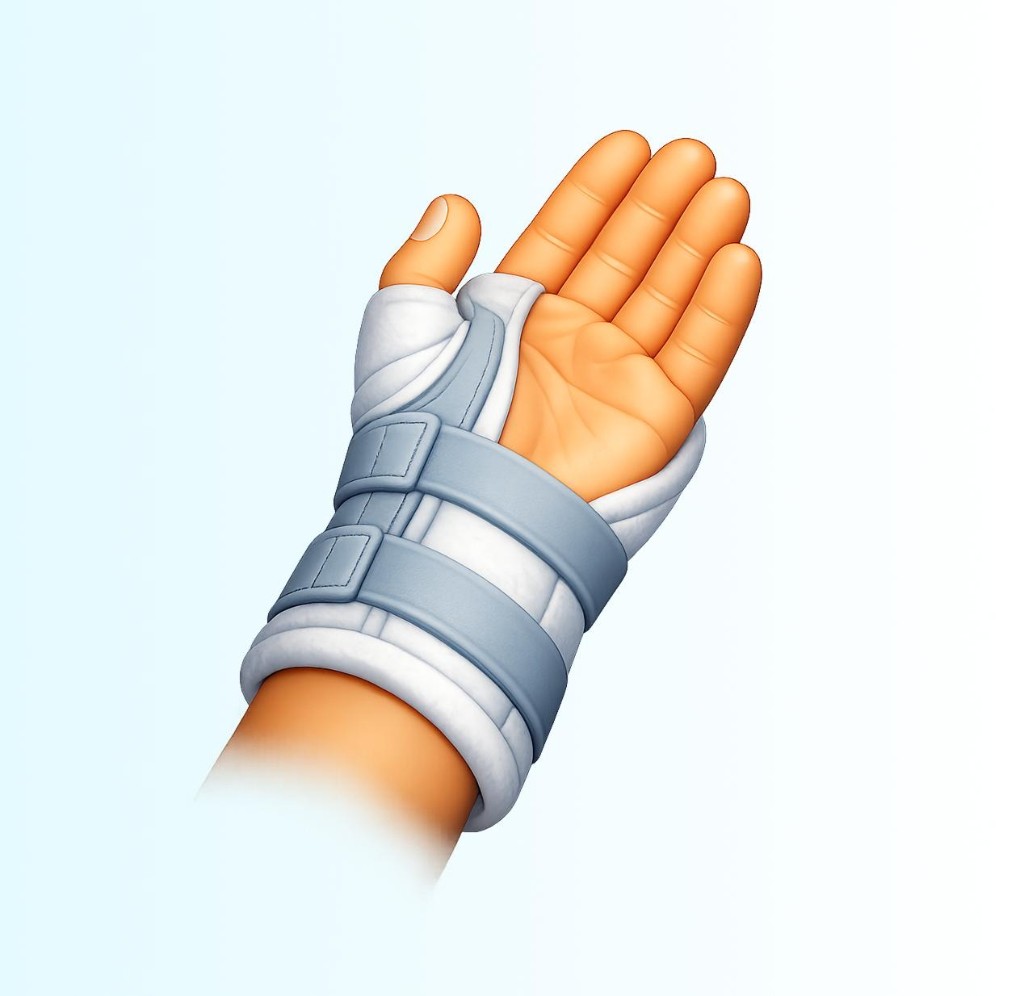
For wrist braces or supports, use marketplace listings as orientation — start from Shop and confirm fit with a clinician when swelling or numbness is present.
Related collections
Explore on HandTherapy.app
These in-app guides pair with this article. They are educational, not a personalized plan.
Evidence & product framing
Journal articles cite external literature for education — see how HandTherapy.app uses research as a transparency layer, not proof of clinical validation.
Related articles
- The ninety-second hand recovery habit: tiny movement snacks between tasks
Ergonomic and therapy education often emphasize pacing and brief movement breaks. Here is how to think about “micro” sessions without over-promising outcomes.
- Median nerve glide exercises: gentle dosing, symptom rules, and when to stop
Nerve glides aim for a mild, tolerable stretch — not aggressive end-range pushing. Stop if symptoms worsen or peripheralize.
- What “just rest it” actually means for hand and wrist recovery — and when it is incomplete advice
Rest reduces irritation after injury, but reputable hand sources also describe gradual return to motion and load. Learn the nuance so you can ask better questions.
- Carpal tunnel syndrome: education, conservative care, and when surgery is discussed
Night symptoms, numbness patterns, and weakness are reasons to seek evaluation — education complements, not replaces, examination.
Sources & further reading
- Carpal tunnel syndrome — NIAMS (NIH)(accessed 2026-05-01)
- Computer use and repetitive strain — NIOSH(accessed 2026-05-01)
Was this article helpful?
Your choice is saved only in this browser. We may record an anonymous helpful / not-helpful tally — not your article text.