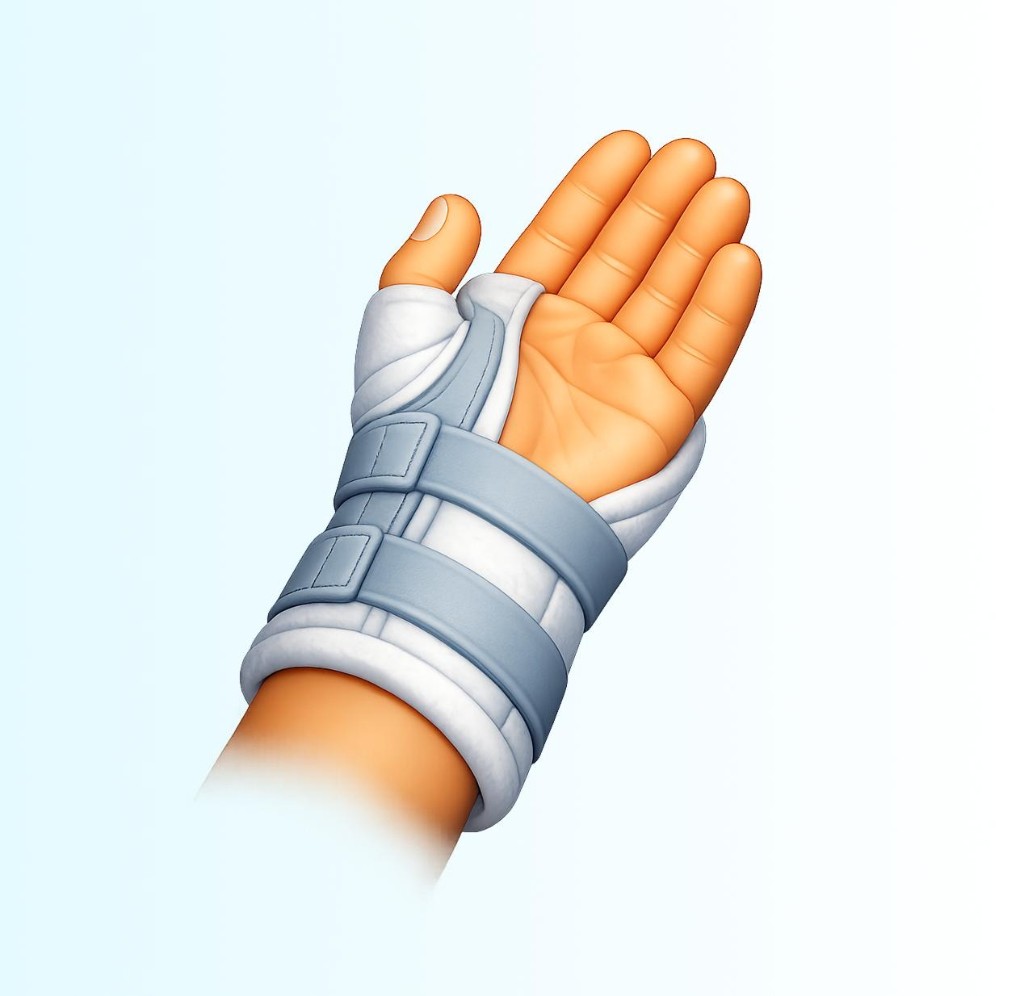
Hand fracture fixation
Realigning broken bones and holding them with pins, wires, or a plate so they heal in the right position.
- Phases
3
- Red flagsEscalation
3
- Sources
1
Page reviewed — follow your clinical team for decisions.
Why it's done
- Displaced or unstable fractures
- Fractures involving a joint surface
Typical recovery phases
General patterns only — your protocol wins.
These phases describe common themes many teams use after this type of procedure. Your surgeon and hand therapist set the exact timeline, motion limits, and return-to-work or driving rules.
- Phase 1Weeks 0–6
Bone healing; protect the construct.
Splint or cast wear as directed; move uninvolved joints.
- Phase 2Weeks 6–12
Restore motion.
Begin gentle motion as your surgeon clears it.
- Phase 3Months 3–6
Strength and return to full activity.
Strength work progresses gradually.
Red flags — call your team
Contact your surgical team urgently for new or worsening symptoms like these. If you cannot reach them and the problem feels life-threatening, use local emergency services.
- Increasing swelling, color change, or numbness
- Hardware site pain that worsens
- Fever or drainage
Sources
Independent references we used to shape this overview. They do not replace your clinician's instructions or your local emergency pathways.
- Hand fractures — American Society for Surgery of the Hand(accessed 2026-04-21)